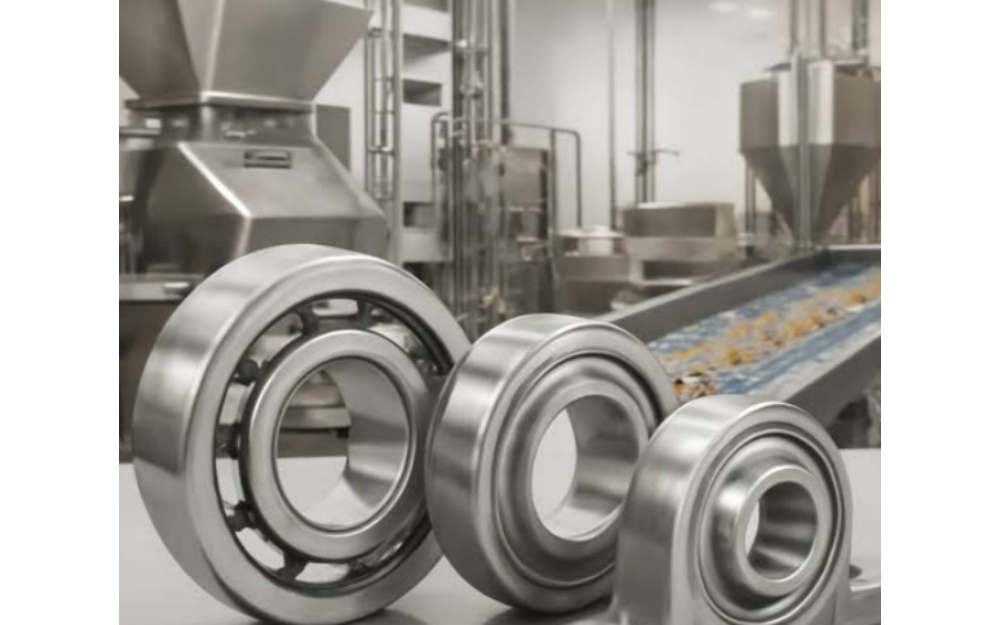
Why Are More Food Factories Switching to Stainless Steel Bearings
Imagine a food production line running at full speed. Thousands of bottles are moving along a conveyor belt, fresh vegetables are being washed and sorted, or biscuits are rolling through an automated baking system. Everything seems perfectly under control.
But hidden inside these machines are dozens, sometimes hundreds, of small components working continuously. Among them, bearings play a surprisingly important role.
Now imagine what happens when water, cleaning chemicals, food particles, and high temperatures become part of the daily working environment. Ordinary steel bearings may begin to rust, seals may deteriorate, and unexpected maintenance problems may appear.
This is one reason why more food manufacturers are turning their attention to stainless steel bearings.
Once considered a specialized option, stainless steel bearings are becoming increasingly important in modern food processing facilities. But what makes them different? Are they really worth the investment? And why are food factories paying more attention to these relatively small mechanical components?
Let's take a closer look.
1. The Food Industry Has a Unique Bearing Problem
Most industrial environments are challenging, but food processing facilities have their own special combination of problems.
Unlike machinery in a typical warehouse or workshop, food production equipment frequently operates in environments involving:
Water and moisture from washing and rinsing.
Food acids, salts, sugars, and organic residues.
Cleaning chemicals and disinfectants.
Frequent high-pressure washdowns.
Temperature changes between production and cleaning cycles.
Continuous operation with strict hygiene requirements.
Consider a meat processing plant. Conveyor systems may be exposed to water, animal fats, salt, and cleaning agents every day.
A dairy factory faces a different challenge. Milk residues, moisture, and regular cleaning create conditions where corrosion can become a serious concern.
Even a bakery, which may appear relatively dry, can expose bearings to flour dust, humidity, heat, and repeated cleaning.
In these environments, a standard bearing may struggle to maintain its performance over time.
The problem is not necessarily that ordinary bearings are poorly manufactured. They are simply not always designed for the demanding conditions found in food production.
This is where stainless steel bearings enter the picture.
2. Why Is Stainless Steel More Resistant to Rust?
The secret behind stainless steel is a very thin protective layer that forms naturally on its surface.
Stainless steel contains chromium, which reacts with oxygen to create a microscopic chromium oxide film.
This passive film acts like an invisible shield, protecting the underlying metal from corrosion.
Even more interestingly, if the surface is slightly scratched, the protective layer can often reform when sufficient oxygen is available.
This ability is known as passivation.
Think of it as a self-repairing protective skin. It is not completely indestructible, but it provides an important advantage in environments where moisture is unavoidable.
For food processing equipment, this property can make a considerable difference.
Stainless steel bearings are generally more resistant to rust and corrosion than conventional carbon steel bearings, particularly when suitable stainless steel grades are selected.
However, not all stainless steel is equally corrosion-resistant.
For example:
AISI 420 stainless steel: A martensitic stainless steel commonly used for bearing components. It offers good hardness and wear resistance, but its corrosion resistance is generally lower than that of 440C.
AISI 440C stainless steel: A high-carbon martensitic stainless steel frequently used in corrosion-resistant bearing applications. It offers a useful combination of hardness and corrosion resistance.
AISI 304 stainless steel: An austenitic stainless steel with good general corrosion resistance, often used in housings and other food processing equipment components. It is not normally used for conventional rolling bearing races because it cannot achieve the same hardness through heat treatment.
Choosing the right material depends on the operating environment, load, speed, and required service life.
In other words, simply purchasing something labeled "stainless steel" does not automatically guarantee the best result.
3. Daily Washdowns: The Real Test for Food Grade Bearings
Here is a question worth asking:
How many times does a food factory clean its equipment?
In some facilities, cleaning happens after every production shift. In others, equipment may undergo multiple cleaning cycles throughout the day.
Water, detergents, disinfectants, and sometimes high-pressure sprays are used to remove food residues and maintain hygienic conditions.
For ordinary bearings, this can become a difficult routine.
Water may enter through inadequate sealing arrangements. Once moisture reaches internal bearing components, corrosion can begin. Cleaning chemicals may also attack exposed surfaces or damage unsuitable sealing materials.
Stainless steel bearings offer better protection against corrosion, but material selection is only part of the solution.
A reliable food processing bearing system should also consider:
Sealing performance: Effective seals help prevent water, cleaning agents, and contaminants from entering the bearing.
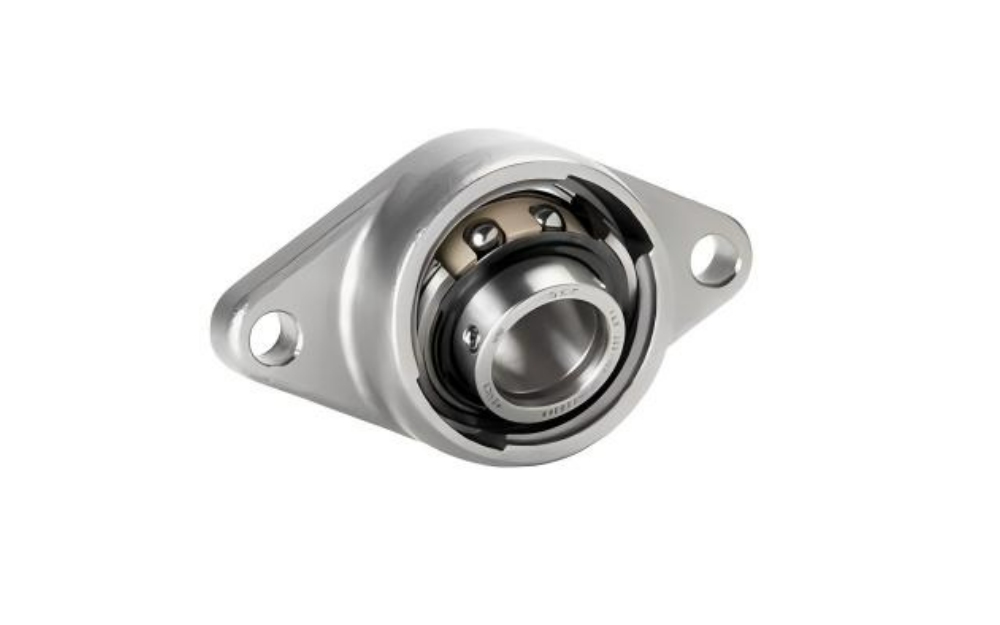
Housing design: Stainless steel bearing units with suitable hygienic designs can reduce areas where dirt and moisture accumulate.
Lubrication: Appropriate lubricants help reduce friction and wear while meeting the requirements of the application.
Installation: Incorrect installation can damage seals or create gaps that allow contamination.
One important point: Stainless steel bearings are not automatically waterproof. Their ability to survive washdowns depends on the complete bearing design, including seals, housing, installation, and maintenance.
For factories that clean equipment frequently, choosing the right combination can help reduce corrosion-related failures and maintenance interruptions.
4. Hygiene Is No Longer Just About Cleaning the Machine
Food safety is not simply about making production equipment look clean.
Modern food manufacturers must consider the possibility of contamination throughout the entire production process.
A failed or deteriorating bearing may create several potential problems.
For example, corrosion can produce metal particles. Damaged seals may release lubricant. Poorly designed equipment may allow food residues and moisture to accumulate around mechanical components.
These risks explain why bearing selection is increasingly connected to food safety management.
Stainless steel bearings can help reduce corrosion-related contamination risks, especially when used with suitable seals, food-grade lubricants, and hygienic equipment designs.
However, it is important to understand that a stainless steel bearing is not automatically FDA-approved or food-safe simply because it is made from stainless steel.
Food safety compliance depends on the complete application, materials, lubricants, equipment design, and applicable regulations.
For example, lubricants used in areas with potential incidental food contact may need appropriate NSF registration, such as H1 classification.
Manufacturers should also evaluate relevant food safety requirements, including applicable FDA regulations and hygienic design guidelines.
The goal is simple: keep the machinery running smoothly without introducing unnecessary contamination risks.
5. Stainless Steel Bearings vs. Standard Steel Bearings: Which Is Better?
Does this mean every food factory should replace all its standard bearings with stainless steel versions?
Not necessarily.
The best bearing depends on the operating conditions.
Here is a practical comparison:
| Feature | Standard Steel Bearings | Stainless Steel Bearings |
|---|---|---|
| Rust resistance | Generally limited | Generally better |
| Moisture resistance | Depends on protection | Better with suitable grades |
| Washdown suitability | Requires careful protection | Often more suitable |
| Hardness | Often higher | Depends on stainless steel grade |
| Corrosion resistance | Limited | Improved |
| Initial cost | Usually lower | Usually higher |
| Maintenance needs | Environment-dependent | Can be lower in corrosive environments |
Standard chrome steel bearings can still be an excellent choice in dry, clean environments where corrosion is not a major concern.
For example, a sealed bearing inside a dry packaging machine may perform perfectly well without requiring a stainless steel alternative.
However, in wet processing areas, seafood factories, dairy plants, and meat processing facilities, stainless steel bearings may offer a more practical long-term solution.
The important question is not simply which bearing costs less.
It is which bearing provides the best balance between performance, maintenance, and total operating cost.
6. The Hidden Economics: Why Cheaper Bearings Can Become More Expensive
Let's look at a simple example.
Imagine a food factory operating a conveyor system with 40 bearing positions.
The purchasing department chooses standard bearings because they cost less.
Initially, everything works well.
But after several months of repeated washdowns, some bearings begin showing signs of corrosion. Maintenance technicians need to replace them more frequently.
Each replacement involves more than the price of a bearing.
There may also be:
Maintenance labor costs.
Production downtime.
Cleaning and inspection expenses.
Replacement part inventory.
Production scheduling disruptions.
Now imagine the factory uses suitable stainless steel bearings designed for its operating environment.
The initial purchase price may be higher, but the improved corrosion resistance may help extend service intervals and reduce certain maintenance problems.
Of course, actual service life depends on loads, speeds, lubrication, sealing, installation, and cleaning practices.
Nevertheless, this illustrates an important purchasing principle:
The cheapest bearing is not always the cheapest bearing to operate.
For food manufacturers, total cost of ownership is often more meaningful than the initial purchase price.
7. Where Are Stainless Steel Bearings Used in the Food Industry?
Stainless steel bearings are used across many food manufacturing applications.
Some common examples include:
Meat and Poultry Processing
Conveyor systems, cutting machines, washing equipment, and automated sorting lines frequently operate in wet environments. Corrosion-resistant bearings can be valuable in these applications.
Dairy Production
Milk processing, filling machines, bottling equipment, and automated packaging systems require reliable components that can withstand regular cleaning.
Seafood Processing
Saltwater and saline residues can accelerate corrosion in unsuitable materials. Selecting appropriate corrosion-resistant bearing materials is especially important.
Beverage Manufacturing
Filling lines, bottle conveyors, washing machines, and labeling equipment often operate under wet conditions.
Bakery and Food Packaging
Mixers, dough-processing machines, cooling conveyors, and packaging equipment may require bearings that tolerate heat, humidity, dust, and cleaning procedures.
Different applications have different requirements, so bearing selection should always consider the actual working environment.
8. How to Choose the Right Stainless Steel Bearings for Food Processing
Before purchasing stainless steel bearings, manufacturers and maintenance engineers should consider several important factors.
1. Check the Stainless Steel Grade
Different stainless steel grades offer different combinations of hardness and corrosion resistance. Choose according to the exposure conditions rather than relying on the general term "stainless steel."
2. Evaluate Sealing Performance
A corrosion-resistant bearing with poor seals may still fail quickly in a demanding washdown environment.
Consider suitable contact seals and bearing unit designs.
3. Consider Food-Grade Lubrication
Where incidental food contact is possible, check whether the lubricant meets the required food safety classification, such as NSF H1.
4. Understand the Operating Conditions
Consider rotational speed, radial and axial loads, operating temperature, cleaning frequency, and chemical exposure.
5. Check Maintenance Requirements
Even high-quality stainless steel bearings need appropriate inspection, installation, and maintenance.
Choosing a bearing based on the actual working environment can help avoid unnecessary replacement costs.
9. The Future of Food Processing Bearings
Food manufacturing is becoming increasingly automated.
Robotic picking systems, high-speed packaging machines, automated conveyors, and intelligent production lines are changing how food factories operate.
As production speeds increase, mechanical reliability becomes even more important.
A small bearing failure can interrupt an entire automated process.
At the same time, food manufacturers are paying greater attention to hygiene, equipment durability, energy efficiency, and maintenance planning.
These developments are creating new opportunities for specialized bearing solutions.
Stainless steel bearings, hygienic bearing units, advanced sealing systems, and food-grade lubrication technologies are likely to remain important components of modern food processing equipment.
The future is not simply about making bearings stronger. It is about making them more suitable for the environments in which they operate.
Conclusion: Small Components, Big Responsibilities
Food factories depend on thousands of mechanical components, but not all of them receive the attention they deserve.
Stainless steel bearings may look like ordinary industrial parts, yet their corrosion resistance, material properties, and compatibility with suitable sealing and lubrication systems can make a meaningful difference in demanding food production environments.
For manufacturers dealing with moisture, frequent washdowns, and strict hygiene requirements, investing in the right stainless steel bearings can be a practical way to improve equipment reliability and manage long-term operating costs.
After all, nobody wants an entire production line to stop because of a component that is small enough to fit in the palm of a hand.
Sometimes, the smallest parts deserve the biggest attention.
Frequently Asked Questions (FAQs)
Q1: Why are stainless steel bearings used in food processing equipment?
Stainless steel bearings offer improved corrosion resistance compared with conventional chrome steel bearings, making them suitable for many wet and frequently cleaned food processing environments.
Q2: Are stainless steel bearings FDA-approved?
Not automatically. Stainless steel itself does not guarantee FDA compliance. The complete bearing assembly, materials, lubricants, and intended application must be evaluated against relevant food safety requirements.
Q3: Are stainless steel bearings waterproof?
No. Stainless steel provides corrosion resistance, but water protection depends on bearing seals, housing design, installation, and operating conditions.
Q4: What stainless steel grade is commonly used for bearings?
AISI 440C is commonly used for corrosion-resistant rolling bearing components because it offers good hardness and corrosion resistance. Other grades may be selected depending on the application.
Q5: Are stainless steel bearings more expensive than standard bearings?
Generally, yes. However, in corrosive environments, they may help reduce replacement frequency and maintenance costs, potentially offering better long-term value.
Q6: Do food grade bearings require special lubrication?
Where incidental food contact is possible, appropriate food-grade lubricants, such as NSF H1-registered lubricants, should be considered according to the application and food safety requirements.
 Why Are More Food Factories Switching to Stainless Steel Bearings
 Warehouse Robots Never Sleep—Can Their Bearings Keep Up?
 How Bearing Downtime Can Cost Offshore Platforms Millions
 Hybrid Bearings vs Steel Bearings: Which One Wins in 2026?